
Year 9 math worksheet answers
Year 9 Graphical/numerical solutions Worksheet Answers
Read the answers online
graphical/numerical solutions
Equivalent correct methods earn the corresponding marks. Include units where asked.
- Use a calculator to estimate both roots of to one decimal place.2 marks
, which rounds to .
- For , calculate and .2 marks
.
.
and - Explain what the previous outputs show about a root of .2 marks
The continuous quadratic changes from negative to positive.
A positive root lies between and . - The graph of is supplied. Estimate its roots to the nearest half unit.2 marks
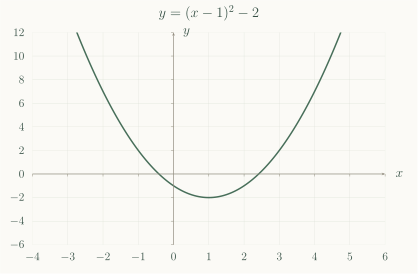
The actual crossings are near and .
The nearest half-unit readings are and .
About and . - Use a table to locate the positive root of between consecutive tenths.3 marks
and .
Between and . - Why does finding not fully solve over the real numbers?3 marks
Both a positive and its negative have the same square.
Check both sides of the parabola.
There is also .