
Year 5 math worksheet answers
Year 5 Symmetry and transformations Worksheet Answers
Read the answers online
symmetry
Equivalent correct methods earn the corresponding marks. Include units where asked.
- How many lines of symmetry does a non-square rectangle have?1 mark
The two lines join midpoints of opposite sides and pass through the centre. Diagonals are not symmetry lines.
2 - Does a square match itself after a quarter turn about its centre?1 mark
The four equal sides and four right angles align after each quarter turn.
Yes. - Does a non-square rectangle match itself after a half turn about its centre?1 mark
Opposite corners and equal opposite sides exchange places.
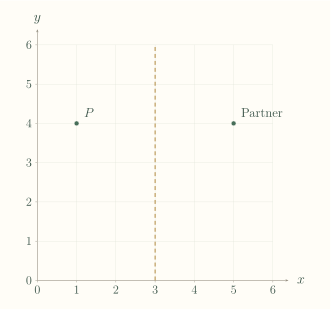
Yes. - A shape is symmetric across . One vertex is at . Where is its matching vertex?2 marks
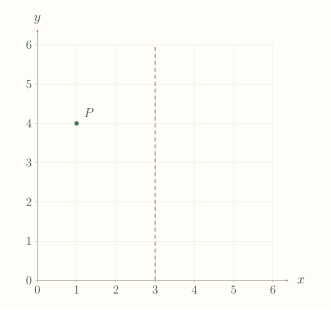
The first vertex is 2 left of the mirror; its partner is 2 right at the same height.
- An isosceles triangle has two equal sloping sides and a different-length base. Describe its one line of symmetry.2 marks
This line exchanges the equal sides and matches the two base corners.
From the vertex where the equal sides meet to the midpoint of the base, perpendicular to the base. - Leah calls the diagonal of a non-square rectangle a mirror line because it cuts the area in half. Explain the mistake.2 marks
Symmetry requires a matching reflected outline, not merely equal areas.
It gives equal-area triangles, but reflection across it does not match the long and short sides.