
Year 10 math worksheet answers
Year 10 Roots, intercepts, symmetry and turning points Worksheet Answers
Read the answers online
roots, intercepts, symmetry and turning points
Equivalent correct methods earn the corresponding marks. Include units where asked.
- State the vertex, axis and minimum of .2 marks
The squared term is zero at .
Vertex ; axis ; minimum . - Find the roots and -intercept of .3 marks
Set each factor to zero; then set .
Roots ; -intercept . - Find the vertex of .2 marks
The axis is ; substitute to get .
- Find all intercepts and the vertex of .4 marks
For roots, .
For the -intercept, use .
Roots ; -intercept ; vertex . - The graph shown is . State its roots, axis and maximum.4 marks
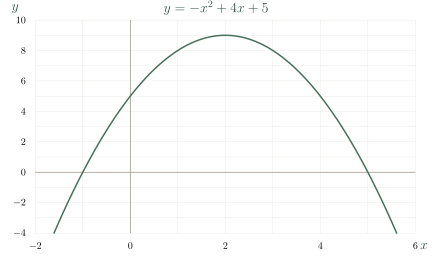
.
The midpoint of the roots is and .
Roots ; axis ; maximum . - A ball has height metres for times from launch until it first reaches the ground. Find the greatest height and the landing time.4 marks
, so the maximum is .
has roots ; use the non-negative landing time.
Greatest height m at s; landing at s.